The Missing Middle of Philanthropy: Organizational Capacity

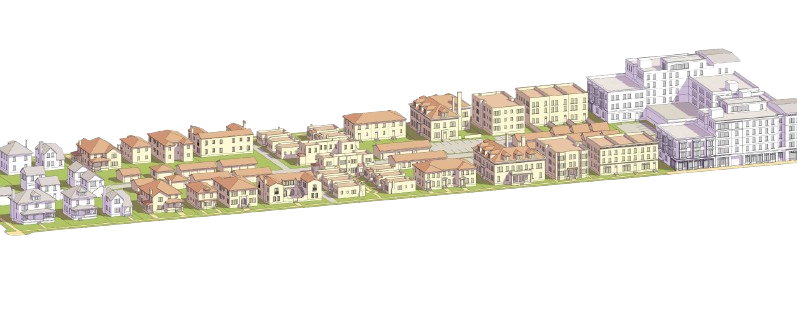
In the housing sector, we build homes largely at two ends of a spectrum: single family homes on one end and multifamily apartments on the other. We call the stuff in between the "missing middle"(duplexes, quads, courtyards, live-work etc.). I would argue that philanthropy has its own ‘”missing middle”. At one end of the spectrum are grand investments in transformative ideas—high-profile campaigns to solve systemic challenges like climate change, racial equity, or global poverty. At the other end, grassroots-level awards for program implementation to address immediate needs such as food insecurity, shelter, education, employment and the like. These investments, while valuable and appropriate, overlook a "missing middle"—the critical need for organizational capacity.
@Opticos
Two immediate questions should immediately occur to the reader. #1: What IS organizational capacity? Followed by #2 and the next question I always ask when anyone starts talking about capacity building, is "capacity to do what?". When I use the term, I'm referring to the infrastructure and systems that enable nonprofits to function effectively and sustainably. In this context, I stress two aspects of organizational capacity in particular:
Capacity to Manage and Govern
Effective leadership and governance structures to guide decision-making.
Financial systems to track budgets, ensure compliance, and plan for sustainability.
Technology and data infrastructure to monitor performance and outcomes.
Capacity to Deliver Programs and Services
Hiring and retaining skilled staff to execute the mission.
Managing resources efficiently to maintain quality and consistency.
Scaling operations to meet growing or changing needs.
I think almost no one would disagree with me that this essential arena is among the most neglected layer of investment by philanthropy, preferring "visible impact" over the behind-the-scenes mechanisms that make that impact possible.
At One End of the Spectrum: Big Concepts, Grand Goals
On one end of the spectrum, major funders invest in ambitious, systemic solutions. These large-scale initiatives—eradicating a disease, restructuring education systems, or mitigating climate change—capture public imagination and often define an organization's legacy. They embody what philanthropy aspires to achieve: transformative change.
However, these high-level goals can bypass the realities on the ground. Nonprofits tasked with implementing these visions frequently lack the tools or staffing to translate ambition into action. A groundbreaking education initiative, for example, cannot succeed if local organizations don’t have trained staff, functioning databases, or strategic frameworks to scale the program.
This is where a ground truth of philanthropy becomes clear: without strengthening the infrastructure of grantee organizations, even the most visionary goals can falter.
At The Other End: Programs and Immediate Needs
On the other end of the spectrum, philanthropy often focuses on direct programmatic support. These efforts address urgent problems and provide tangible, measurable outcomes. For donors, the appeal is obvious: they can see their dollars making a quantifiable difference (sometimes, not always, but that's another article).
Yet this approach can entrench nonprofits in a cycle of unsustainable practices. Nonprofits are consistently forced to stretch limited resources to deliver services while neglecting their long-term sustainability and capacity. Weak governance, lackluster financial management, and anemic fund development become endemic, further reducing their capacity to innovate or expand their impact.
Here, too, the ground truth emerges: while funding programmatic needs is critical, it does not build the strength or adaptability required to sustain organizations as robust and capable for the long term to confront the challenges they have set themselves.
The Missing Middle of Philanthropy: Building Organizational Capacity
This missing middle—investment in organizational capacity—serves as the bridge between grand aspirations and programmatic needs. However, this arena remains under invested in because it lacks the visibility, utility and dare I say it, glamour of the other two. Capacity-building isn't about direct impact. It's about enabling organizations to achieve impact, sustainably and at appropriate scale. Despite its importance, capacity-building is sidelined. A 2021 report by the Center for Effective Philanthropy found that only 20% of nonprofit leaders believe their funders provide sufficient support for capacity-building efforts. This neglect perpetuates a cycle where nonprofits struggle to grow and innovate, which only undermines the effectiveness of philanthropic investments.
Rethinking Philanthropy’s Approach
Addressing this requires a shift in how philanthropy defines success. Funders must recognize that investments in organizational capacity are not a detour from impact—they are an essential driver of it. This involves:
Inventing or Reinventing Impact Metrics: A major reason for not investing in organizational capacity is because philanthropy has no metrics for measuring such investments. Impact measurement is actually an issue onto itself anyway, but even more acute when applied to organizational capacity
Providing Flexible Funding: Offering equitable working capital (operating support!!) that allows organizations to allocate resources where they are most needed.
Normalizing Capacity Investments: Advocating for capacity-building as a standard part of philanthropic practice, not an afterthought.
The Path Forward
The ground truth is clear: grand visions and programmatic investment alone are not enough. To truly strengthen nonprofits, philanthropy must embrace strengthening the infrastructure that allows organizations to thrive. Investment in organizational capacity can ensure funders their dollars not only address today’s problems but also build the resilience and innovation needed to tackle tomorrow’s challenges.